








James Cameron confronts loss, legacy, and irreversible change as the death of Neteyam reshapes Pandora’s future
The world of Avatar has always been one of spectacle — soaring skies, luminous forests, and epic battles for survival. But in Avatar: Fire and Ash, now playing in theaters, James Cameron brings the franchise into more intimate, emotionally grounded territory, allowing real human grief to become the driving force of the story. At the heart of this chapter lies the lingering presence of Neteyam, the eldest son of Jake Sully and Neytiri, whose death in Avatar: The Way of Water irrevocably alters the Sully family and the fate of Pandora itself.
Though Neteyam fell during the climactic ocean battle in the previous film, his spirit endures. In Na’vi belief, souls remain accessible through Eywa, the planetary deity that binds all life. Jamie Flatters returns as Neteyam, appearing in dreamlike sequences where his family connects with him through memory and spiritual communion. Yet while his presence offers moments of solace, it cannot erase the weight of loss that permeates every frame of Fire and Ash.
The film opens with a haunting vision: Lo’ak, Neteyam’s younger brother, flying through the skies of Pandora alongside him in an Eywa dreamscape. The beauty of the moment is undercut by guilt — Lo’ak believes he bears responsibility for his brother’s death. That emotional fracture extends throughout the family. Neytiri continues to wear her ceremonial mourning face paint, her grief raw and unresolved. Jake, meanwhile, retreats into hyper-vigilance, becoming fiercely overprotective of his children while suppressing his own pain.
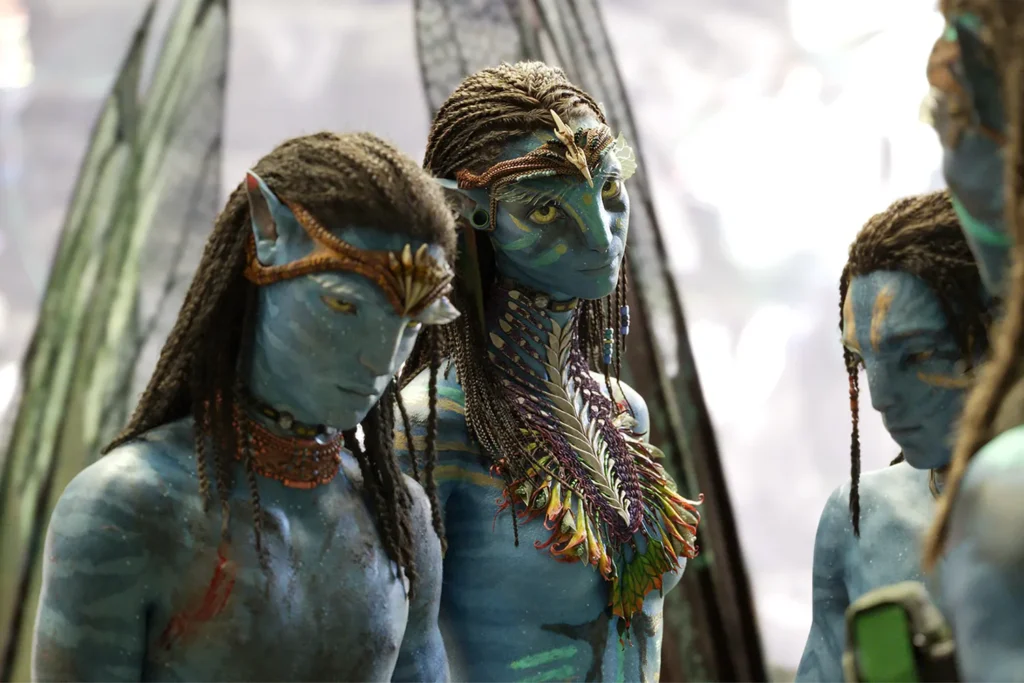
James Cameron makes no attempt to reset his characters to a familiar status quo. Instead, he embraces change as a narrative necessity. “Real human tragedy changes people, changes them irrevocably,” Cameron explains. In contrast to much of commercial filmmaking, where heroes are expected to emerge untouched, Fire and Ash allows grief to leave scars. The characters are not the same — and that is the point.
Cameron acknowledges that Avatar is often grouped with blockbuster franchises driven by spectacle, but he insists this chapter is rooted in lived experience. Drawing inspiration from his own life as a father of five, he frames the story through the emotional realities of adolescence, identity, anxiety, and loss. “I wanted it to feel as real as a straight drama,” he notes, grounding even the most fantastical imagery in recognizably human emotion.
As the Sullys struggle internally, external threats close in. Jake remains a prime target of the RDA as human forces continue their relentless colonization of Pandora. Colonel Quaritch, once again portrayed by Stephen Lang, hunts the family across new biomes. But a new and deeply unsettling danger emerges in the form of the Ash People — a volcanic Na’vi clan led by Varang, played with chilling intensity by Oona Chaplin.

Varang is not a villain driven by conquest alone; she is shaped by loss. Years earlier, a catastrophic natural disaster destroyed her people and claimed those she loved, twisting her grief into rage. Her desire to spread fire — both literal and symbolic — across Pandora mirrors the emotional peril Neytiri faces as she grapples with her son’s death. Fire and Ash draws a stark parallel between these two mothers, asking how grief can either harden into destruction or be transformed into resilience.
For Cameron, this emotional throughline is essential. “If we enter it through the eyes of complex human emotion, then it doesn’t matter how fantastic the imagery is,” he says. Family becomes the film’s central axis — a source of strength, conflict, comfort, and unbearable pain. It is both a refuge and a vulnerability, shaping every decision the characters make.
In Avatar: Fire and Ash, Pandora is still breathtaking, the battles still grand. But beneath the fire and fury lies something quieter and more enduring: a meditation on loss, love, and the ways tragedy reshapes us. By allowing Neteyam’s death to echo through every relationship and every choice, Cameron delivers not just another epic chapter, but a deeply human story — one that insists cinema, even at its most spectacular, can still remember what it means to grieve.